Tracking your food is one of the best ways to get a deep look into what you are doing on the nutrition side of things. What we eat shapes a lot of how our body looks, feels, and functions.
You want to lose weight? Then you need to consume less than you are burning.
You want to feel better? The foods you eat play a major role in your energy, inflammation, and stress levels.
You want to tone up your legs? Consuming enough protein each day and controlling your calorie intake will let you be able to build muscle and burn some body fat to give your legs the look you are searching for.
Just about any goal can be achieved without tracking food, BUT that is not to say that tracking isn’t one of the more effective ways to streamline your success. Being able to get an objective view of what and how much you are eating can be the key to your success over time.
For some, food tracking can become an over-obsession. Seeing all the numbers laid out not to mention, an app telling you something you ate was too high in sodium or contained high levels of fat.
There’s not always someone there telling you that foods are neither good nor bad, or that high levels of fat are not necessarily a negative thing. When these pieces of feedback keep coming in, you start to feel controlled by every piece of food that enters your body. Sometimes subconsciously avoiding things your body may need.
Once we take away the positive benefits food tracking can have, things take a turn that cause your relationships with food to be altered. Food tracking is meant to be a peak inside the foods you are eating, not a scare tactic to feel shameful when certain things are consumed.
So let’s look at the 4 ways you can still track your food without becoming obsessed with It.
#1. Write Things By Hand
If you have ever used an app like MyFitness Pal in the past then you know how much control It can have on you. It’s tracking every single thing you put into that app. It’s not only telling you that your last meal was too high in carbs, It’s also telling you you went over on your fat goal for the day.
These apps put targets on just about every measurable parameter they can. And they base those things off a few numbers you plug into the intake questions –> Height, weight, goal weight.
Now, I love having goals but it’s hard to have an unbiased few weeks of tracking without looking at these targets and feeling like you are going down the wrong path for not hitting them.
This is where I see most of the obsessive behaviors stemming from. As a society we love having a set goal and having someone tell us what to do to get to that goal. Food tracking apps are great for that.
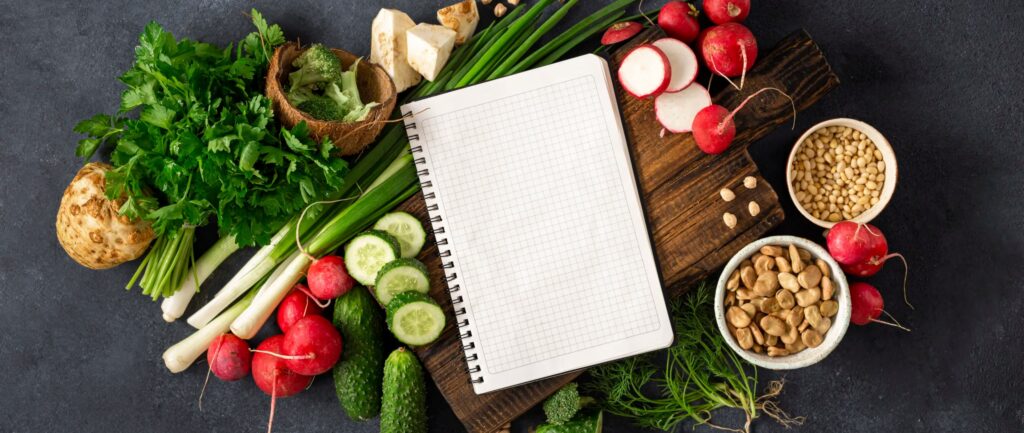
This is also why I like to look away from the apps and have people write their food down by hand. Grab a small notebook, put a date on the top and start tracking. When you first start out, don’t change your eating habits, just write things down.
Now after a week, think about how things went from your perspective. Be honest with yourself. How were your food choices? What things did you feel good about, or bad about? Why? Where do you think you could have done a little better?
After you reflect on the week, make a small goal that you are going to change in the following week. After another week goes by, you can do this same thing all over again. You don’t need the exact numbers in a certain app to tell you things are going well.
When you see what you are eating written down, It will already have a big effect on the way you eat. Then, by asking yourself how things are going, you can make changes based off how you feel instead of what the numbers might be saying.
#2. Only Track Protein
When I work with people on their nutrition we just about always start by figuring out how many calories and how much protein they are eating each day. You know what we do if food tracking becomes an obsession, we stop tracking the calories and just track the protein.
You can get MUCH farther than you think by only tracking this one nutrient. Protein is important, especially if your goal is to not only reach a certain weight but to look, feel, and move better along the way.
The protein is what will get your body to hold onto the muscle you worked so hard for, helping you get a certain shape to your body. It also is very satiating, trumping a good amount of cravings or unnecessary snacking during the day.
Not that this topic is about selling the importance of protein, we need to know how important this one nutrient is before I just say we should avoid all the others and just focus on this one.
On food tracking apps, you have the option to adjust your protein target. This will make sure you are on track every single day. There are two ways I like to calculate protein intake for the day.
1.) Take your bodyweight and multiply that by .7-1.0–> this will be how many grams per day you will aim for. So a 200lb person would be between 140 and 200 grams of protein each day.
2.) If the number above seems way too high for you to actually use, then take your “goal” weight and multiply that number by .7–> this will be your new protein target. So a 300lb person who would be happy to get down 215lbs would eat between 150 grams of protein each day.
#3. Track One Meal Per Day
Another way you can avoid obsession when It comes to tracking your food is to only track one meal per day. If you take a look at your current way of eating there are usually a few similarities day to day.
Break down your day into 3-4 meals. Sometimes one of the those meals will be considered a snack, but either way, 3-4 times you are going to eat. From here what I want you to do is lay out 2 meals and 1 snack you KNOW for a fact you can eat most days – the consistent meals.
These meals should be balanced in as many ways as you can. Prioritizing protein first (30-40 grams), making sure there is a healthy fat, and a strong amount of carbs (20-60 grams). Now, if you are going to add a snack into the day, make It something that has at least 2 out of the 3 macronutrients (carbs, fats, proteins). If you tend to eat lower on the protein side, pick something that will have protein in It.
You are going to eat these 2-3 meals every single day (not forever, but for a week or two before changing them up). You know what is in these meals, you know how they make you feel, and you know they are giving you the nutrients you need. There is still 1 meal left for you to eat during the day and that will be the meal you track.
This meal will give you the freedom and variety away from the rest of the day but keep you on track because you are going to be logging that meal every single day. This type of food tracking is very hard to become obsessive with because you are not going to see the numbers from the other 2-3 meals. What you will find yourself doing is keeping a closer eye and tweaking that final meal of the day because those are the numbers you have full control over.
I love this style of food logging in the sense that you are still able to learn what is in your food. From nutrients, to value, and even the effects on your body but without the need to control every aspect of the food that enters your body for the entire day.
This is actually the style of eating and food tracking I have been following for the past few years. Since I have tracked and eaten the meals I enjoy, I made them my staple meals for breakfast, lunch, and a snack. There is no need for me to track them each day because I know what they consist of and how they affect my body. Find the things you enjoy, learn about them, and then use them to your advantage!
#4. Track Before The Day Starts
I put this one last because I have seen this style work great for most people, but there have been a few people in the past where this style was not the right fit. In a sense, this style of food tracking goes well with #3 because you will already have a general idea what your day of eating will look like. Just like when you already know what most of your meals will look like from #3.
With this approach you need to be proactive. There has to be a plan and a way you are going to execute that plan. Without that, you are making plans just to break them.
I like this approach a lot because It takes the guesswork out of your day. If you work your butt off everyday and find little time for yourself, this is the plan for you. All the planning comes the night before. You are not only going to write down exactly what you will eat each meal, but you are also going to get those foods ready to go.
When you put in the numbers for what you want to eat, you will see what your daily food will look like for that day. Maybe after you put in all your food you realize your protein is going to be a bit low. Now you can add in something to a meal or snack to bump the protein up where It needs to be.
Maybe you see your calories are on the lower side and you have room for a little treat after dinner. All these numbers are out in the open for you to see BEFORE you start your day.
This gives you the ability to change things accordingly before you get engulfed in your work day, but only if you actually follow through with your plan!
Tracking food is something I ask everyone to do for at least a small period of time. It’s not something you need to do for the rest of your life or even the rest of the year. But It is a way to let you learn what is in the foods you eat and how those foods affect your body.
With that, food tracking can create some unhealthy habits. We want to avoid that the best we can because you don’t deserve to have a poor relationship with food or your body. You deserve to be able to learn and grow in a way that gives you balance across all areas of your life. Take these 4 styles of food tracking and implement them where you see fit. Find a way that you can figure out the qualities of you food without sacrificing in any other areas of your life.
These are not the only 4 ways you can track your food in a healthy manner but they are the 4 that I use with my clients and have had great success with over time.
In good health,
Jeff
P.S.
Want more stuff like this? Join our weekly newsletter for more bite sized bits of information that will keep you seeing the progress you want.
Email Jeff@naglefitness.com to join in