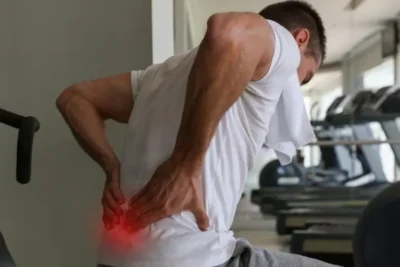
The god forsaken bench press is basically the holy grail of the fitness world. The classic line, “how much do you bench?” has basically ridded people from benching properly and instead just attempting to push as much weight as possible. This has lead to many people using crappy form such as butts flying off the bench, half reps where the bar is no where near their chest or 10 assisted reps from the spotter where the person benching is less fatigued than the spotter after each set. These kinds of bench presses technically don’t count if you are going to compare them to powerlifting standards but if people want to personally say they pushed the weight then by all means go ahead. But if you want to be able to push big weight and have it actually “count” and be able to control that weight then continue on reading.
The first tip I can give for the bench press is your hand placement. Every single person will have a different hand placement that works for them. Some people use a very wide grip when benching where they really rely a lot on the pecs to push the weight. others use a very narrow grip where it is primarily triceps moving the weight. And some people have a pretty neutral grip which is a pretty even distribution of pecs, shoulders, and triceps. To personalize your grip you have to find out where your strengths are. If you are strong in the triceps and not so much in the chest then you have 2 options, either use a closer grip to use your stronger muscles, or use neutral or wider(ish) (not too wide) grip to strengthen the pecs before finding your perfect hand placement. As a general rule, but not generally for everyone, a grip a tiny bit wider than neutral is primarily used to move the most amount of weight on the bench press.
The next tip is something i hope many people are doing already but is retracting your scapula!!!! This is a major set up rule for the bench press. No you do not have to have a crazy arch in your back for it to be effective, even a tiny arch will do you some good for this movement. By retracting you scapula you are forcing your shoulders to drive into the bench thus locking your upper body in a stiff position to be able to stay sturdy as the weight gets heavier. Another way to make sure you are really locked in and find a little extra power at the bottom of the lift is to do a few sets of light work on your rear delta. This will really lock you in that position on the bench and will also make sure you are strong at the bottom of the lift to shoot it off your chest. Retracting your scapula will also let you get your legs to be placed below the angle of your hips thus use your legs to drive the weight from the bottom position. Although you are using your legs for drive this does not mean lift your butt off the bench!! You have to keep your butt planted no matter how heavy the weight but don’t forget to always use a spotter, without one this movement is one of the most dangerous ones you will encounter alone.
The last and final tip I will give for this movement is about control. Control on the way down, control on the way up, and control in your breathing. Lets start off with breathing. Once that weight is off the rack and in the top position and you are ready to begin the movement, take a big breath in seeing that this might be a long process and hold that breath as long as you can. One thing that I found works for me very well is to not let out any of that breath until I see the movement slowing down or finding a sticking point. At that moment I keep pushing while releasing the breath slowly until the movement is done. Controlling the weight on the way down is a huge component as well. I tend to look at coming down slowly as loading a spring. Coming down nice and slow and once you hit that chest (not bouncing the weight!!) with all that control, then shooting it as hard as you can back in the air. If you ever watch the big powerlifters do their lifts, like a Stan Efferding squat, you will see how slow he comes on the way down and generates all his power to shoot up from the bottom. Now moving on to controlling on the way up. This is not as technical as the way down but it is just about trying to keep the weight moving steadily upward and not rocking back and forth and most definitely not letting the weight come downward!
I hope these tips can help some of you and get some use from it!!
Check out my YOUTUBE channel https://www.youtube.com/channel/UCVeNe_AmZ3ALHQytHZBzJtA