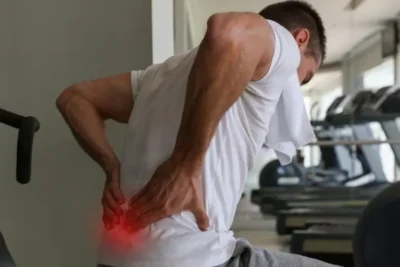
Have you ever been so sore from a workout that you can’t even sit on the toilet? That has to be one of the most miserable feelings in the world.
“OH Yeah I killed my workout yesterday but I can’t go to the bathroom”
There is a hell of a lot of people who are out searching for that painful soreness after every workout. Some people’s only indicator of a “good” workout is how sore they are for the next few days.
Muscle soreness is the affect of microscopic tears/damage done to the muscle during exercise and accompanied by the inflammation that occurs creates that sore feeling (Dr. David O. Draper).
I hope if you are reading this you realize that soreness is a NOT a sufficient measure of a workout.
I used to fall into this trap when I first began lifting. I would do one body part every day at the gym, destroy that area, feel so sore it was hard to move, and when the soreness would go away it would be time to train that body part again.
PLEASE DON’T DO THIS.
This is a telltale sign of overtraining. I was not giving my muscles adequate time to recover and adapt before breaking them down again. I was running in quicksand. My muscles never had a chance to adapt or grow because they were too busy trying to get back to normal.
The most soreness you are looking for after a “good” workout is a little tenderness when you move a particular area to know that you worked those muscles the day before.
Now if you have no soreness at all, that doesn’t mean your workout was a waste of time by any means. Like I said, don’t gauge a workout by your soreness.
BUT if you do get super sore after a workout because you decided to push yourself a little bit then there are things you can do to cut that pain down.
NUMBER 1: MOVE
The general and most common course of action to deal with soreness is to avoid those areas at all costs.
“Holy shit my chest hurts so much”
So now the rest of the day you are turning your entire body to pick up your water because you don’t want to move your arms and make your chest work.
The best thing you can do to break up that soreness is to get moving. If you are not training that particular day then go for a nice long walk.
Now if you are going to train on the day that you are sore then you HAVE TO move the area that’s sore. Don’t avoid it.
When my legs are sore as all hell (yes sometimes I over-train as well) I make sure that my warm-up is thorough and my first 1-2 movements are leg exercises.
I will only do 2-5 sets for my legs in total when they are super sore, but let me tell you, they feel so much better when I leave the gym.
Moving the particular area that hurts will speed up the recovery process and allow your muscles to repair, heal, and adapt.
NUMBER 2: MOBILIZE
I have to preface this section with stating that 95% of you reading this right now are NOT doing enough mobility work.
So use your muscle soreness as an excuse to do more mobility throughout the week.
This will lengthen, strengthen, and activate the muscles to force them to work and recover. Same idea as the movement section, the goal is to speed up the recovery process and get those muscles to work just enough.
Mobility routines give you the ability to achieve and strengthen newfound ranges of motion. This allows you to use your muscles through fuller ranges of motion, which will lead to greater muscle growth.
It will also clean up imbalances, strengthen weak spots, correct poor movement patterns, and make you feel so damn good.
Do I have to sell mobility anymore or do we understand the importance?
If you don’t believe in it yet shoot me an email and I’ll go into more detail as to why YOU need more mobility in your life.
NUMBER 3: WATER
I was thinking about copying and pasting the section about mobility and using it for the water section as well.
I cannot stress enough how important water is to your overall health and wellness. For the importance of this particular article, it will give your muscles the hydration they need to repair and recover much faster.
Water is the foundation that people tend to miss. Now I am not talking about flavored drinks, coffee, sports drinks, or anything else for that matter. Pure, clean, delicious, crisp water is what I am talking about.
During these summer months where we are spending more time outdoors and the heat has been beaming down as well, we need even more water to keep our general hydration levels at a healthy rate.
I know this particular section is pretty broad about just drinking more water.
So to be more specific, if you are very sore from a particular workout increase your water intake by 15-25% (unless you are already drinking excessive amounts of water) and you will assist in the recovery process and break up some of that soreness.
Looking back at these 3 topics, they WILL decrease your amount of soreness in a much more effective way than most other methods.
As stated at the top of this post, soreness, in most cases is not the indicator you are looking for to validate good workouts.
We all push ourselves and get sore at some point or another, so when you do, follow these 3 steps and you will be able to get through the day without looking like a walking scarecrow.
Now these three topics are not just for muscle soreness.
These are things that you can incorporate to your everyday life whether you are sore or not and you will benefit in a great way.
Getting up and moving everyday, mobilizing your body, and drinking enough water are three things I would put at the top of your priority list no matter what your goals are for your health, strength, or aesthetics.
Get moving, drink some water, and feel great!
Jeffrey Nagle
Coach || OPEX South Shore